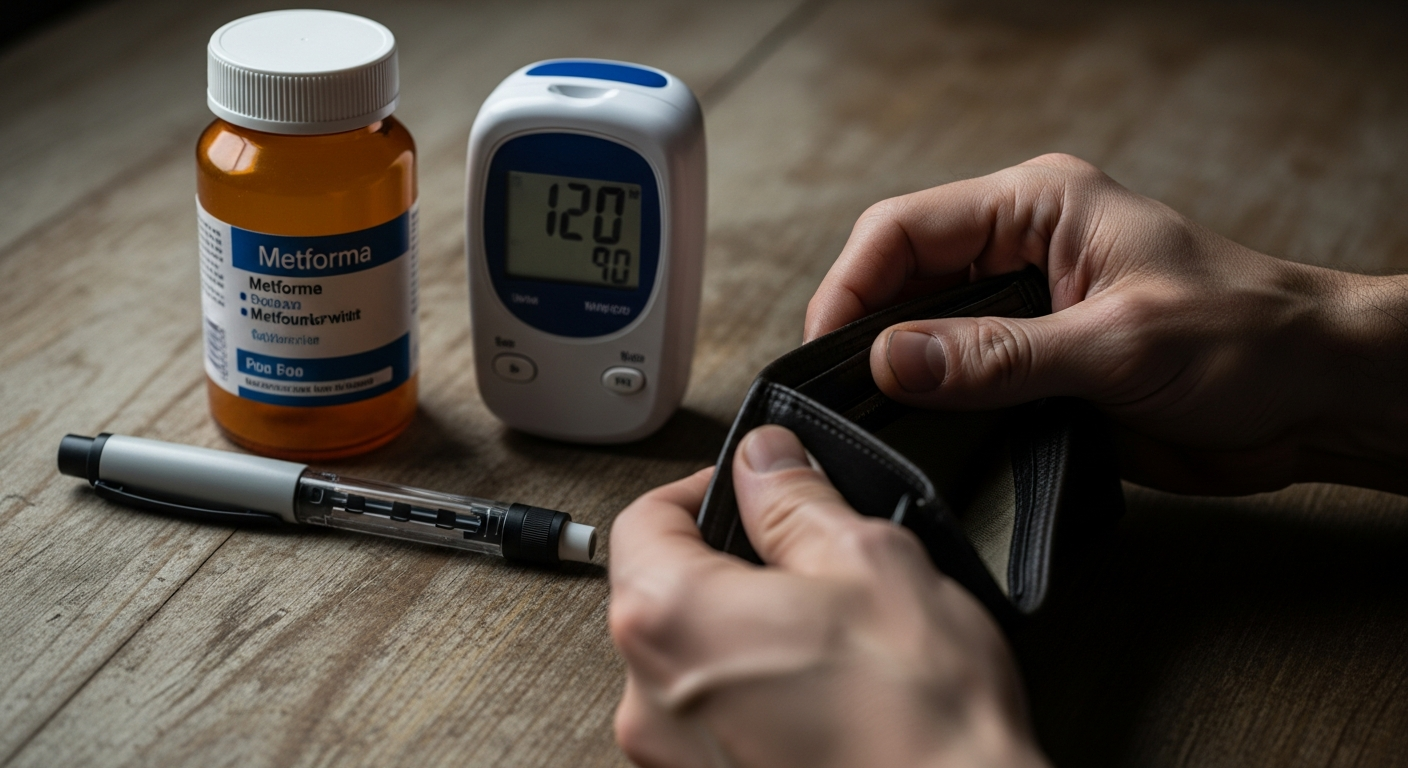
Insulin and Insulin and diabetes medications can cost hundreds of dollars per month without health insurance. For the millions of people with diabetes who are uninsured or underinsured, that cost is not sustainable. The good news: patient assistance programs, Medicaid, community health centers, and manufacturer savings programs make diabetes care far more affordable than the retail price suggests.
This guide covers every real option for getting insulin and diabetes medications at reduced cost — starting with the programs that help people with diabetes most quickly and reliably.
Use RxDiff's free price comparison tool to compare diabetes medication prices at pharmacies near you before filling any prescription.
Before exploring individual medication programs, check whether you qualify for a health insurance plan. A health insurance plan that covers diabetes medications and supplies will almost always be cheaper long-term than paying out of pocket for each prescription separately.
Medicaid is the most accessible government health insurance for people with low incomes. In states that expanded Medicaid, individuals earning up to 138% of the federal poverty level may be eligible. Medicaid covers insulin, metformin, and most other medications at very low or no cost. Apply through your state's benefits portal or the health insurance marketplace at healthcare.gov.
ACA Marketplace plans — contact your insurance company about options. These are another insurance option for people with diabetes who earn too much for Medicaid. Subsidies are available based on income, and all marketplace plans must cover your prescriptions and supplies. Open enrollment runs annually, but a loss of insurance coverage qualifies you for a Special Enrollment Period year-round.
Medicare covers people 65 and older and those with certain disabilities. Medicare Part D covers most insulin prescriptions, while Medicare Part B covers insulin used in an insulin pump. Since 2023, Medicare Part D caps insulin cost at $35 per month per insulin. If you may be eligible for Medicare, visit Medicare.gov to review your insurance options and enrollment windows.
Patient assistance from pharmaceutical companies is the fastest source of financial help for diabetes patients who need insulin immediately. These programs are funded by insulin manufacturers to help people without insurance coverage access their medications.
The Lilly Insulin Value Program offers Humalog, Basaglar, and other Lilly insulin products for $35 per month per prescription. This program is available to patients with and without commercial insurance. Lilly insulin assistance is available at most participating pharmacies with no income requirement. Visit Lilly's website or call their helpline to enroll in the Lilly patient assistance program.
Novo Nordisk offers insulin products including Novolog, Levemir, and Tresiba through its My$99Insulin program for $99 per month for up to three vials or two packs of pens. Novo Nordisk also offers a patient assistance program for uninsured patients who meet income requirements — providing insulin at no cost. The monthly insulin cost through these programs is dramatically lower than the retail price.
Sanofi's program covers Lantus, Toujeo, Admelog, and Apidra — offering up to 78% off the retail price for uninsured patients. The Sanofi patient assistance program provides free insulin to patients who meet income and insurance eligibility requirements. Contact Sanofi directly or ask your health care team to submit a patient assistance application.
These programs help people with diabetes access insulin affordability solutions without navigating complex insurance paperwork. Ask your doctor or pharmacist which insulin manufacturers make the products in your current regimen — then contact those manufacturers directly about their manufacturer support programs.
Medicaid eligibility is income-based and varies by state. Diabetic patients who are uninsured often qualify for Medicaid without realizing it — particularly after a change in employment, income, or family size. Apply through your state Medicaid agency or through the federal health insurance marketplace.
Medicaid covers all types of insulin as well as oral diabetes medications like metformin, Januvia, and Farxiga. The out-of-pocket cost for insulin fills under Medicaid is typically $0 to $4 per fill.
If you have diabetes and are considering Medicaid, contact your state's Medicaid office or visit your state's benefits.gov page. Enrollment can happen year-round — there is no waiting period for Medicaid based on a qualifying life event.
For those with diabetes who are 65 or older, or who qualify for Medicare due to disability, Medicare Part D is the federal health insurance program that covers most prescription insulin and oral prescriptions. Each Medicare Part D plan has a formulary, so coverage for specific oral diabetes drugs varies by plan.
Part D coverage Part B covers insulin for patients using an insulin pump, along with diabetes supplies like lancets, test strips, and glucose monitors. Part B also covers diabetes prevention programs and certain diabetes-related services. Talk with your health care team about which Medicare coverage pathway applies to your specific insulin delivery method.
If you qualify for Medicare's Extra Help program — also called the Low Income Subsidy (LIS) — your out-of-pocket cost for insulin and other your diabetes drugs may be reduced to near zero. The Extra Help program is available to Medicare beneficiaries with limited income and resources. Get Part D coverage enrollment help at Medicare.gov or by calling 1-800-633-4227.
Community health centers are one of the most underused resources for people living with diabetes uninsured. At an FQHC, you can see a doctor, get your diabetes medications prescribed, and receive ongoing diabetes care — all at a cost scaled to what you can afford.
These centers typically stock a range of your prescriptions and supplies, including insulin, metformin, and blood glucose testing supplies. The health care team at these centers is experienced in managing diabetes for low-income and uninsured patients and can connect you with additional assistance programs in your area.
Find FQHCs near you using the HRSA health center locator. These federally funded centers provide low cost diabetes care and prescriptions regardless of ability to pay.
The American Diabetes Association runs a Safe & Sound insulin access program that connects diabetic patients to insulin at reduced cost. The American Diabetes Association also maintains a pharmacy resource guide to help people find programs in their area — the ADA is a reliable starting point for navigating diabetes costs.
Beyond Type 1 is a nonprofit organization that helps people with type 1 diabetes specifically access insulin and manage their diabetes costs. Beyond Type 1 offers a free insulin directory that lists programs where patients can get their insulin at no cost or reduced cost in emergency situations. People without coverage can reach the organization's helpline for guidance on the medication affordability and different diabetes medication access programs.
State prescription assistance programs help low-income residents who don't qualify for Medicare but still face high health care costs. These programs vary by state and may cover these prescriptions, diabetes supplies, and other oral diabetes drugs. Contact your state health department or department of aging to find out which programs may help you.
For oral diabetes medications, prescription discount cards from GoodRx and SingleCare offer significant savings. Metformin — the first-line treatment for type 2 diabetes — costs as little as $4 per month with a discount card. Compare prices for Jardiance, Ozempic, and Mounjaro on RxDiff to find the lowest available price before filling.
Managing diabetes without health insurance requires a multi-program approach. Most patients benefit from combining manufacturer assistance for insulin with a discount card for oral medications and community health center care for doctor visits.
Here are the most practical steps for managing their blood sugar costs and insulin doses cost management when uninsured: When you manage your diabetes as an uninsured patient, combining programs is the key strategy.
Apply for Medicaid first. Even if you think you earn too much, eligibility rules vary by state. Medicaid is the fastest path to comprehensive coverage for diabetes medications and supplies including insulin, test strips, and an insulin pump if prescribed.
Contact insulin manufacturers directly. Eli Lilly, The manufacturer, and Sanofi all have manufacturer support programs. Call each manufacturer whose insulin doses you use and ask about free samples, emergency supply programs, and long-term assistance enrollment. Manufacturer programs help thousands of affected patients get their the medication for free each year.
Use Walmart's $25 OTC it for emergencies. Walmart sells human insulin (NPH and Regular) over the counter for $25 per vial — no prescription required. While not interchangeable with all types of insulin doses, this is a life-saving option during a gap in coverage. Always consult your health care team before switching the medication types.
Consider insurance marketplace plans. If you don't qualify for Medicaid, check your eligibility for subsidized marketplace health insurance. Health insurance coverage through a marketplace plan may be available for as little as $0 per month for low-income individuals, with low copays for your prescriptions and supplies. Get diabetes insurance options at healthcare.gov.
Check commercial insurance through your employer. If you or a family member has access to an employer-sponsored commercial insurance plan, compare the cost of enrolling to what you're spending out of pocket. Commercial insurance that covers diabetes typically includes it, oral medications, supplies, and preventive care for it at a predictable monthly cost.
RxDiff compares metformin, Jardiance, Farxiga, and hundreds of other oral blood sugar management drugs across pharmacies near you — free, no account needed.
Compare Diabetes Drug Prices on RxDiffPeople without health insurance can access insulin through manufacturer drug company support programs from Eli Lilly, Novo Nordisk, and Sanofi — often at $0 to $99 per month. Walmart sells over-the-counter ReliOn human insulin doses for $25 per vial. These health centers provide your the medication on a sliding-fee scale. Apply for Medicaid as a longer-term solution to cover all your your diabetes drugs and supplies at very low cost.
Programs that help with it costs include the Lilly Insulin Value Program ($35/month), The manufacturer My$99Insulin ($99/month for up to 3 vials), Sanofi Insulins Valyou, ADA Safe & Sound, Part D coverage The subsidy program, Medicaid, and state assistance initiatives. These programs may be eligible to get you insulin doses immediately — contact each manufacturer directly to confirm eligibility and enrollment steps.
Yes — Medicaid covers the medication and all major diabetes medications including metformin, GLP-1 drugs, and SGLT-2 inhibitors for eligible enrollees. Medicare covers diabetes supplies like test strips and lancets as well. Managing diabetes affordably through Medicaid is one of the most comprehensive options available. Apply through your state's Medicaid portal or healthcare.gov year-round.
The cheapest it for diabetic patients is Walmart's ReliOn over-the-counter human insulin at $25 per vial — no prescription needed. For prescription analog insulin doses, manufacturer manufacturer support programs from Lilly and Sanofi provide the lowest available price. Monthly the medication through these programs ranges from $0 to $99 depending on the manufacturer and your income. Always talk with your doctor before switching between different types of it.
Medicare Part D covers most prescription insulin and oral prescriptions. Medicare The equipment benefit covers insulin doses for pump users and blood sugar management supplies. Since 2023, Medicare Part D caps the medication at $35 per month per product. The Part D coverage The subsidy program program (Low Income Subsidy) reduces costs further for qualifying beneficiaries. Get Medicaid enrollment help at Medicare.gov or by calling 1-800-633-4227.
Yes — free oral diabetes drugs and supplies are available through several channels. Patient assistance programs help many those with diabetes get it at no cost when they meet income requirements. These centers provide free samples and reduced-cost prescriptions. Beyond Type 1 and the American Diabetes Association also connect people with free insulin programs in emergency situations. Ask your health care team or it care provider for referrals to local programs.
This article is for informational purposes only and does not constitute medical or financial advice. Program eligibility, costs, and availability change frequently — always verify current details directly with each program before applying. Consult your doctor before making any changes to your blood sugar management medication regimen. RxDiff is not affiliated with any manufacturer assistance program or government health insurance program.