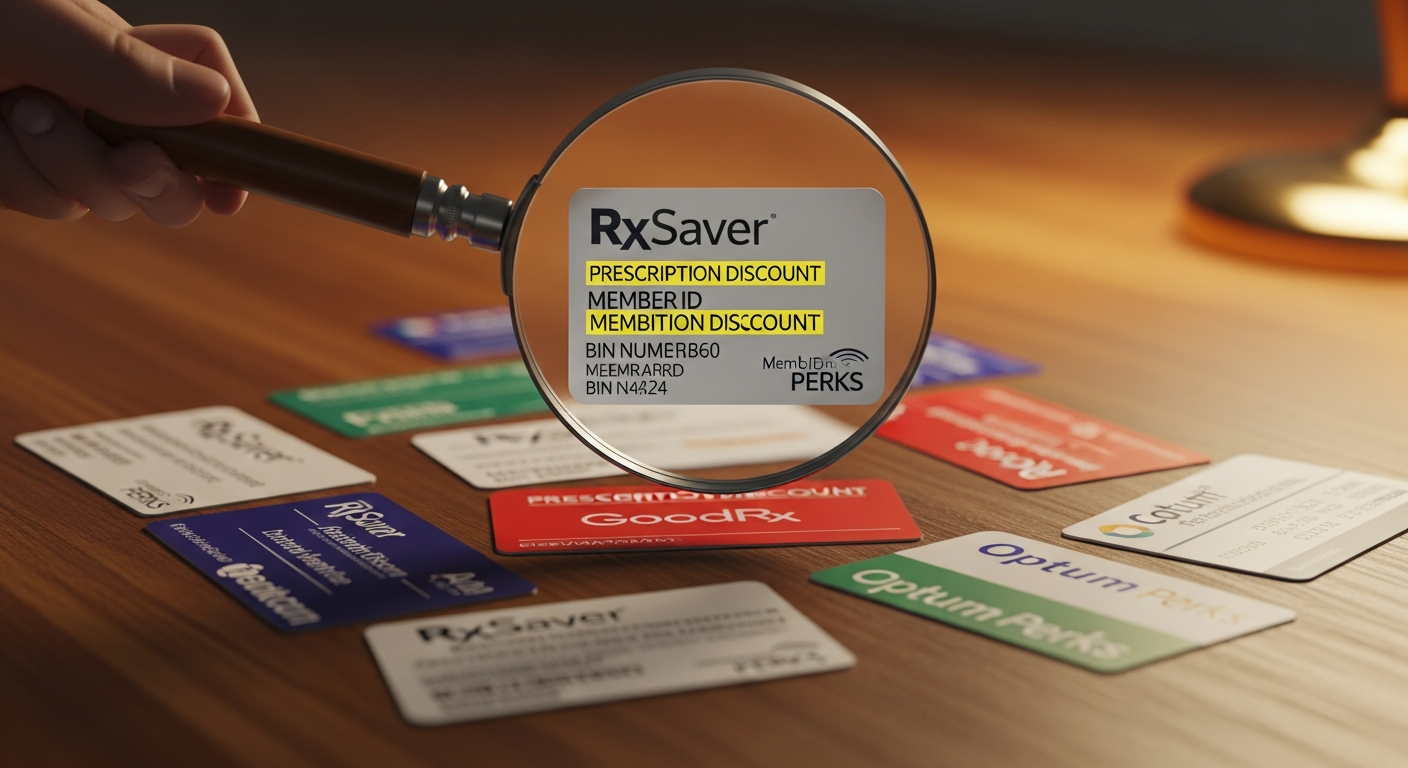
Prescription drug discount cards lower your cost at the pharmacy — but most people using them have no idea why. They just know the price is lower. Understanding the actual mechanism helps you use these cards more effectively and choose the right one.

Here's how prescription discount card programs actually work, step by step.

How Prescription Drug Discount Cards Work

Prescription discount cards work by giving you access to pre-negotiated drug prices arranged between card companies and pharmacy benefit managers (PBMs). When you show your card at the pharmacy counter, the pharmacist looks up the contracted rate and charges you that lower price instead of the full retail price.
1
Card companies negotiate rates with PBMs
Discount card companies like GoodRx and SingleCare negotiate drug prices with pharmacy benefit managers (PBMs). PBMs sit between pharmacies and payers — they have contracts with thousands of participating pharmacies nationwide.
2
Pharmacies agree to honor the negotiated rates
Participating pharmacies agree to accept the pre-negotiated prices in exchange for joining the network. Most major chains — CVS, Walgreens, Walmart, Kroger, Costco — and many independent pharmacies participate in major card networks.
3
You show the card at the pharmacy
When you present your discount card or coupon, the pharmacist enters the card's BIN, PCN, and group number into their system. These codes identify which PBM contract and which negotiated rate applies to your prescription.
4
The system applies the discounted price
The pharmacy's system looks up the pre-negotiated rate for your specific drug, dosage, and quantity. You pay that lower price — not the retail list price. The discount applies instantly, with no claim or paperwork on your part.
5
The card company earns a small transaction fee
This is how free discount card programs generate revenue. The pharmacy pays a small per-transaction fee to the card company — typically a few dollars. You pay nothing beyond the discounted prescription drug price.
Why prices differ between cards: GoodRx, SingleCare, BuzzRx, and WellRx each have different PBM contracts with different negotiated rates. That's why the price for the same medication at the same pharmacy can be $14 with one card and $10 with another. The rates are genuinely different — always worth comparing before you fill.

Are Prescription Discount Cards Legitimate?

Yes — major prescription drug discount cards are legitimate tools used by millions of patients. They are free, accepted at most pharmacies nationwide, and provide real savings through negotiated pricing. These aren't coupons from sketchy websites — they're programs backed by pharmacy benefit managers with contracts at real pharmacies.

Prescription drug discount cards operate through the same PBM infrastructure that insurance companies use. The difference is that discount cards give individual patients direct access to negotiated pricing without requiring a health plan.

Well-established card programs include GoodRx, SingleCare, BuzzRx, ScriptSave WellRx, Optum Perks, and RxDiff. All are free, all accept no payment from you directly, and all work at major pharmacy chains nationwide. Some have been FTC-reviewed — the FTC's 2023 action against GoodRx specifically addressed data privacy practices, not the pricing mechanism itself, which remains legitimate.

Prescription Discount Cards vs. Insurance — Key Differences

Prescription discount cards and health insurance are separate systems. You cannot use both on the same prescription at the same time — you choose one at the pharmacy counter. Discount card purchases don't count toward your insurance deductible.

✅ Use your discount card when:

Your insurance deductible hasn't been met · The drug isn't covered by your plan · The card price is lower than your copay · You don't have insurance at all

✅ Use your insurance when:

You've already met your deductible · Your insurance copay is lower than the card price · You're tracking spend toward your out-of-pocket maximum · The drug is a specialty medication with prior authorization

The rule: compare both prices before filling each prescription. For common generic medications, the savings card price is often lower than the insurance copay — especially for patients who haven't met their annual deductible.

Medicare patients: Federal law prohibits using a prescription price reduction card alongside Medicare Part D for the same prescription. You must choose one or the other. GoodRx and similar cards can still be used instead of Medicare Part D when the card price is lower — but that fill won't count toward your Part D deductible or coverage gap.

Which Prescription Discount Card Program Is Best?

No single prescription drug discount card is cheapest on every medication. GoodRx, SingleCare, BuzzRx, and WellRx all negotiate different rates — the best card depends on your specific drug and pharmacy location.
CardCostNetworkBest For
GoodRxFree70,000+Wide availability, popular generics
SingleCareFree35,000+Often beats GoodRx on common generics
BuzzRxFree60,000+Brand-name drugs and independent pharmacies
WellRxFree65,000+Comparison app, major chains
GoodRx Gold$9.99/moSelect onlyHigh-volume fillers at Gold pharmacies
RxDiffFree70,000+Compare all cards in one search

How to Use a Prescription Discount Card at the Pharmacy

Using a prescription drug lower cost card takes three steps: search your medication to find the best price, bring the card or coupon to the pharmacy, and show it to the pharmacist when picking up your prescription. Savings apply instantly — no forms, no waiting.

Step 1 — Search your medication: Use RxDiff or your card's app to search your drug name, dosage, and quantity. Prices shown are what you'll actually pay at the counter — not estimates.

Step 2 — Pick your pharmacy: Compare prices at nearby locations. The same medication and card can vary by $15 or more between pharmacies. Choose the lowest price at a convenient location.

Step 3 — Show the card at the counter: Present your card, app screen, or printed coupon before the pharmacist rings up your prescription. Make clear you want to use the savings card — not your insurance — for this fill.

What Prescription Discount Cards Can and Cannot Do

Medication lower price cards can significantly lower the price of generic and brand-name medications at most pharmacies, with no insurance required. They cannot be combined with insurance, don't count toward your deductible, and won't always beat insurance copays.

Drug price reduction cards work well for most situations but have clear limits:

They CAN: Provide savings of up to 80% on generic medications · Cover both generic medications and brand-name prescription drugs · Be used by anyone regardless of insurance status · Be used at most major pharmacy chains · Apply savings instantly with no paperwork

They CANNOT: Be combined with insurance on the same your meds · Count toward your insurance deductible or out-of-pocket maximum · Guarantee the lowest price on every drug at every pharmacy location · Work with Medicare Part D simultaneously · Cover every medication at every participating pharmacy (some restrictions apply)

Find Your Best Prescription Discount Now

Search RxDiff to compare prices across GoodRx, SingleCare, BuzzRx, WellRx, and more — free, instant, no account needed.

Compare Drug Prices →

A prescription discount card works by connecting you to a network of participating pharmacies that have agreed to accept the card's negotiated prices. When you present your prescription discount card at the pharmacy, the pharmacist looks up the contracted rate for your drug and charges you that price instead of the full retail amount.

The Centers for Medicare & Medicaid Services (CMS) clarifies that prescription discount cards cannot be used with Medicare or Medicaid — they are separate from government programs. Prescription discount cards are not insurance — they cannot be combined with insurance for the same prescription. You use either your prescription discount card or your insurance, whichever gives you a lower price. A prescription discount card is often the better choice when you haven't met your deductible.

Not all prescription discount cards offer the same prices. It's worth comparing multiple prescription discount card options before filling a costly prescription. Free prescription discount card programs like GoodRx, SingleCare, and BuzzRx all give you access to different negotiated rates at the same pharmacies.

Frequently Asked Questions

They work by connecting you to pre-negotiated drug prices between card companies and pharmacy benefit managers. When you show your card at the drugstore, the pharmacist enters the card's codes and charges you the contracted rate instead of retail price. The card company earns a small fee from the pharmacy — you pay nothing extra beyond the discounted drug price.

Yes — major cards like GoodRx, SingleCare, BuzzRx, WellRx, and RxDiff are legitimate and widely used. They operate through the same the location benefit manager infrastructure that coverage companies use, giving patients direct access to negotiated pricing. They're free and accepted at tens of thousands of pharmacies nationwide.

You can use a lower price card instead of your health coverage, but not both simultaneously. At the pharmacy, you choose one or the other. The card is often the better choice when your deductible hasn't been met, a medication isn't covered, or the card price beats your insurance copay.

Different card companies have different contracts with different PBMs, which have negotiated different rates with pharmacies. That's why GoodRx might show a different price than SingleCare for the same drug at the same the chain. The rates are genuinely different — always compare before filling to find the best your meds price reduction available.

Most major cards are accepted at 60,000–70,000 pharmacies nationwide including all major chains. A small number of independent pharmacies opt out of some card networks. Always verify your specific the store accepts the card before heading in — checking on RxDiff or the card's app will show you current participating pharmacies.

No. When you use a savings card instead of your plan, the purchase does not count toward your deductible or out-of-pocket maximum. This matters if you're tracking spend toward your annual deductible, particularly later in the year when you may be close to meeting it.