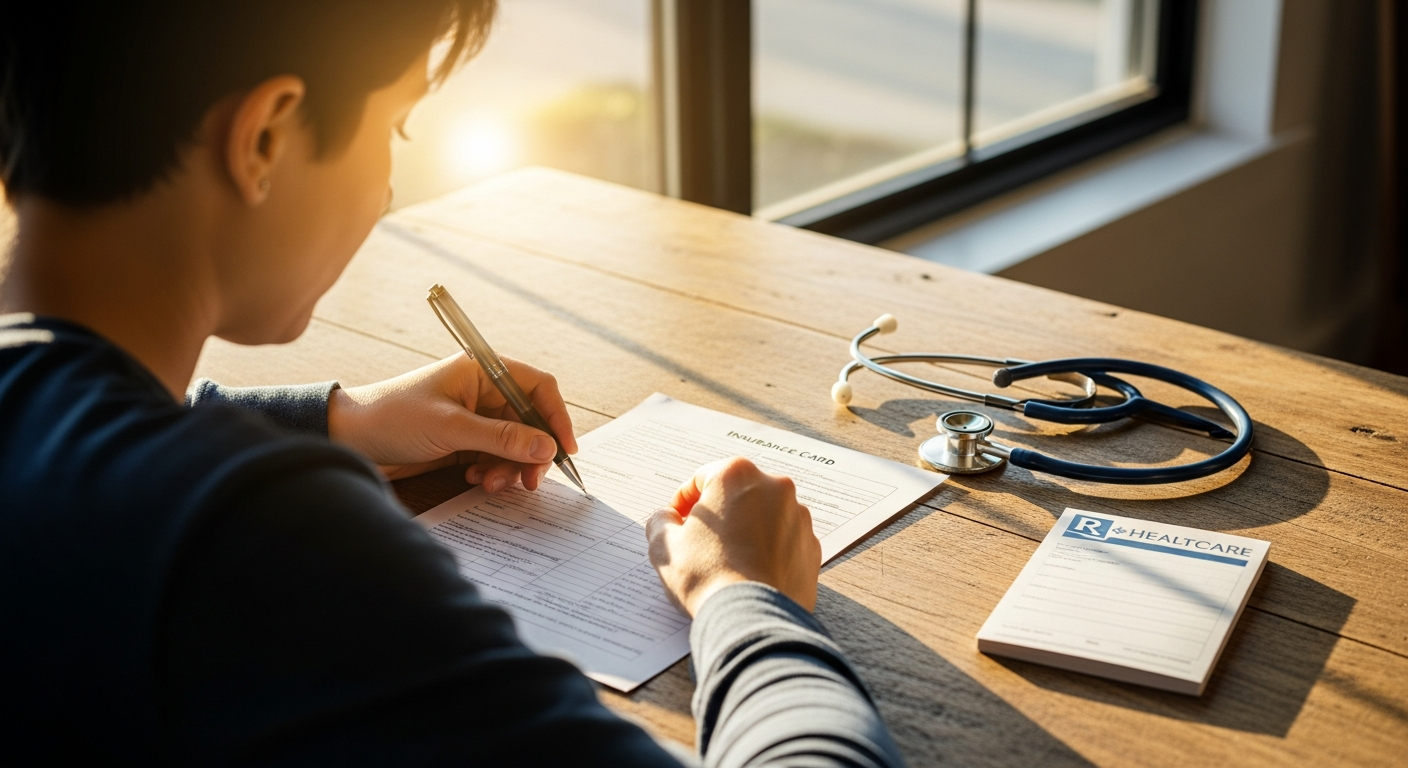
Not having insurance doesn't mean not having access to prescriptions. You need two things: a licensed provider to write the prescription, and a pharmacy to fill it. Both are accessible without insurance — and the total cost for common generic medications can be under $20.
Here are the most affordable ways to get a prescription without insurance, ranked from cheapest to most expensive.
Ways to Get a Prescription Without Insurance
-
Telehealth — Fastest and Often Cheapest
Online healthcare providers can evaluate you and send a prescription directly to your local pharmacy — often in under an hour. No travel, no waiting room. Telehealth visits for common conditions typically cost $30–$75 without insurance, making this one of the most affordable ways to get a medication. DrHouse, Teladoc, and similar platforms serve uninsured patients directly.
-
Federally Qualified Health Centers (FQHCs)
FQHCs are federally funded community health centers that serve patients regardless of insurance status. They charge on a sliding scale — meaning your fee is based on your household income. For low-income uninsured patients, visits can be $0–$20. Find one near you at findahealthcenter.hrsa.gov.
-
Free and Charitable Clinics
Many communities have volunteer-run free clinics for uninsured patients. Services vary, but many can write prescriptions for common conditions. Search "free clinic near me" or check the National Association of Free & Charitable Clinics at nafcclinics.org.
-
Urgent Care Clinics
Urgent care centers accept walk-in patients without insurance and can prescribe medications for most acute conditions. Visits run $100–$200 without insurance — more expensive than telehealth but faster than scheduling with a primary care provider.
-
Private Practice Doctor — Self-Pay Rate
Many private practice providers offer a self-pay or uninsured discount — often 20–40% off their standard rate. Always ask upfront: "Do you have a cash-pay or uninsured rate?" before the visit. Costs vary widely but typically run $100–$300 per visit.
How Much Do Prescriptions Cost Without Insurance?
Using a Prescription Discount Card Without Insurance
A prescription discount card is separate from insurance — it's a tool anyone can use regardless of insurance status. For uninsured patients, it's the single easiest way to lower the cost of most it medications.
How it works: search your medication on RxDiff, see prices at nearby pharmacies, and show the coupon at the counter. No coverage card, no claim, no waiting. The pharmacist processes the discount automatically.
Patient Assistance Programs for Uninsured Patients
For brand-name and specialty medications that are too expensive even with a savings card, manufacturer patient assistance programs can provide the medication free or at very low cost. Eligibility is typically based on income and your plan status.
NeedyMeds.org: A nonprofit directory of patient assistance programs, disease-specific programs, and discount drug programs. Free to search and covers thousands of medications.
RxAssist.org: Another directory connecting patients with manufacturer assistance programs and other drug subsidy programs.
Manufacturer websites directly: For expensive brand-name drugs — GLP-1 medications, biologics, specialty drugs — the manufacturer's own patient assistance portal is often the most direct path. Search "[drug name] patient assistance program" to find it.
Getting Prescriptions Through Telehealth Without Insurance
For uninsured patients who need a prescription and don't have an established primary care provider, telehealth eliminates the barriers of scheduling, travel, and higher in-office costs. Licensed healthcare providers evaluate you online and send prescriptions electronically to your preferred pharmacy.
Common conditions well-suited to telehealth prescriptions include high blood pressure, diabetes management (metformin), depression and anxiety, acid reflux, UTIs, thyroid medication refills, and many others.
DrHouse — Online Doctor Visits Without Insurance
DrHouse connects patients with licensed healthcare providers for online visits — no health coverage required. Get evaluated, receive a medication, and have it sent directly to your pharmacy. Affordable flat-rate visits for common conditions including high blood pressure, diabetes medications, and more.
Visit DrHouse →Advertising disclosure: RxDiff may earn a commission if you click this link and make a purchase. This does not affect the price you pay.
Can You Get Generic Medications Without a Prescription?
For medications that require a meds, you'll always need a licensed healthcare provider to write one — regardless of insurance. The options above (telehealth, FQHCs, a walk-in clinic) provide the fastest and most affordable paths to getting that your meds.
Once you have the medication, the free the card handles the cost reduction at the pharmacy. The combination of a low-cost telehealth visit and a free discount card brings total out-of-pocket cost for a new the drug to under $50 for most common generic medications.
Find the Lowest Prescription Price Near You
Once you have your prescription, search RxDiff to compare prices at pharmacies in your area — free, instant, no coverage needed.
Compare Drug Prices →Getting prescriptions without insurance is possible through several affordable pathways. Community health centers offer prescriptions without insurance to patients on a sliding-fee scale. Prescriptions without insurance are also available through telehealth providers at lower cost than traditional office visits.
If you have a chronic condition such as diabetes, hypertension, or asthma, managing prescriptions without insurance long-term requires a strategy. Chronic condition management programs at federally qualified health centers often provide both the prescription and the medication at reduced cost for uninsured patients.
Frequently Asked Questions
The cheapest ways to get a prescription without insurance are a federally qualified health center (FQHC), a prescription discount card, or a patient assistance program directly from the drug manufacturer.
Each option has different eligibility rules. FQHCs serve patients regardless of ability to pay. Discount cards work at most retail pharmacies with no income requirement. Manufacturer programs typically require proof of income and uninsured status.
Yes — you do not need health a health plan to receive a drug. Any licensed healthcare provider can write a it regardless of your insurance status. You will pay out of pocket for the visit and the medication, but options like telehealth, community health centers, and discount cards make both affordable.
Doctor visit costs without your plan: telehealth visits $30–$75; urgent care $100–$200; community health centers $0–$40 on a sliding scale for low-income patients; private practice $100–$300+. Telehealth is usually the most affordable option for straightforward drug needs.
Many common generic medications cost $4–$12 without health coverage using a free meds it. These include lisinopril, metformin, atorvastatin, gabapentin, omeprazole, sertraline, losartan, levothyroxine, and many others. Walmart's $4 generic program and free cards like RxDiff make most common generics very affordable even without coverage.
Yes. Federally Qualified Health Centers (FQHCs) offer care including prescriptions on a sliding-scale fee basis — care may be free or very low cost for qualifying patients. Free and charitable clinics also exist in many communities through volunteer providers. Find an FQHC at findahealthcenter.hrsa.gov.
For many maintenance medications — blood pressure, diabetes, mental health — a telehealth visit can result in a refill quickly and affordably without an in-person visit. Controlled substances (Adderall, benzodiazepines, opioids) have stricter federal rules and typically require an in-person evaluation. Check with a telehealth provider about your specific medication.