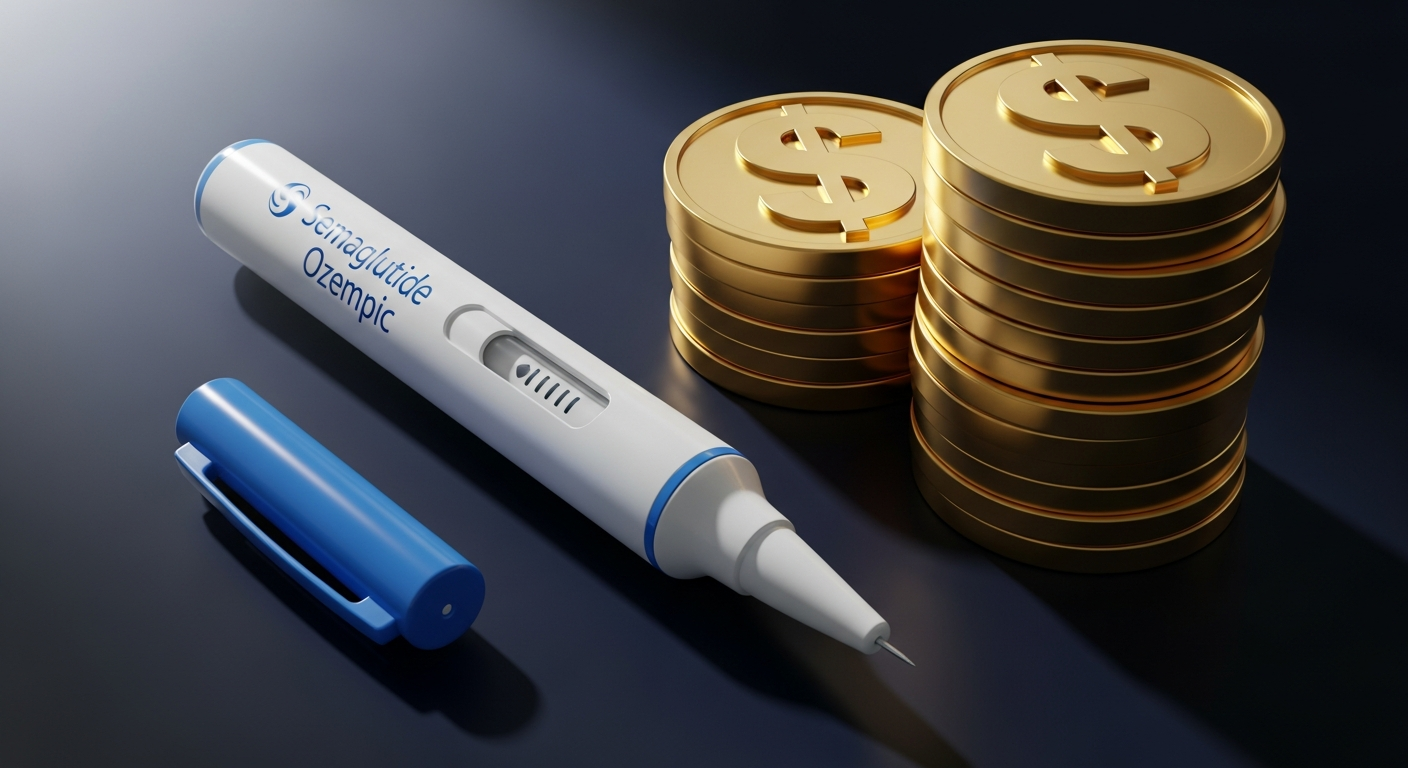
What you pay for Ozempic depends almost entirely on your insurance situation. The list price without any coverage is close to $950 per month — but with the right savings program, that number drops dramatically. Here's the complete price picture across every scenario.

Ozempic (semaglutide injection) is a GLP-1 receptor agonist manufactured by Novo Nordisk and FDA-approved for type 2 diabetes management in adults. It's also widely prescribed off-label for weight loss, though coverage for that use is less consistent.

Without Insurance
~$950
Per month, no savings card or program
With Insurance
$25–$150
Per month copay range (varies by plan)
With Savings Card
$25
Min. for eligible commercially insured patients

How Much Does Ozempic Cost Without Insurance?

Ozempic's retail list price is approximately $935–$970 per month for a 30-day supply without insurance. This applies across all doses — 0.5 mg, 1 mg, and 2 mg pens are priced similarly per injection. Without a savings program, Ozempic costs nearly $1,000 per month out of pocket.
Scenario Monthly Cost Notes
No insurance, no savings card ~$950/mo Full retail list price
No insurance, with discount card ~$800–$900/mo Modest savings on brand-name
Commercial insurance covers Ozempic + savings card As low as $25/mo Novo Nordisk savings card, eligible patients
Commercial insurance doesn't cover Ozempic ~$349/mo With the card, not covered by plan
No insurance, patient assistance $0 Qualifying low-income patients
Medicare Part D (T2D coverage) Varies by plan No savings card allowed with Medicare

The 90-day supply of Ozempic may offer a slightly lower per-pen price at some pharmacies compared to filling monthly — worth asking about if you're on a stable dose and paying cash.

Ozempic Cost With Insurance

The medication's cost with insurance depends on your plan's tier structure, whether prior authorization is approved, and where you are in your deductible cycle. Most commercially insured patients with covered It pay $25–$150 per month in copays.

Your out-of-pocket cost for The medication with insurance changes depending on where you are in your plan year and coverage structure. Here are the key scenarios:

Prior authorization is almost always required for The injection, even when your plan covers it. Your healthcare provider submits this on your behalf. If denied, you have the right to appeal — ask your provider to document the medical necessity of The medication specifically for your type 2 diabetes management.

The Ozempic Savings Card — How Much It Actually Saves

Novo Nordisk's It the card allows eligible commercially insured patients to pay as little as $25 per month. It's the most impactful cost-reduction tool for commercially insured patients — but it is not available to Medicare or Medicaid patients.

The Ozempic savings offer from Novo Nordisk works at the pharmacy counter alongside your commercial a health plan. Eligibility requirements are similar to other GLP-1 manufacturer savings programs:

Who qualifies: Patients with a valid The drug prescription, commercial (private) insurance, and who are not covered by Medicare, Medicaid, or any government-funded coverage.

What it saves: Eligible patients with your plan that covers The injection can pay as little as $25 per month for the first two months, then typically $25/month ongoing. Patients whose insurance doesn't cover The medication may pay around $349 per month with the card. All savings are subject to annual maximum limits and program terms.

How to get it: Enroll through Novo Nordisk's official This drug patient savings page. You'll receive a digital card with a BIN, PCN, and group number to present at the pharmacy alongside your health coverage card.

Annual savings cap applies. The This GLP-1 drug savings card has a maximum savings amount per calendar year. Once reached, you pay standard out-of-pocket cost for the remainder of the year. Keep track of your cumulative savings through the enrollment portal.

Does Insurance Cover Ozempic?

A health plan commonly covers The medication for type 2 diabetes with prior authorization. Coverage for weight loss is inconsistent — The medication is not FDA-approved for weight management, so insurers frequently deny that use. Wegovy (semaglutide 2.4 mg) is the FDA-approved version for weight loss.

The diagnosis code on your It prescription has a major impact on whether your insurance covers it. Here's how coverage typically splits:

For type 2 diabetes: Most commercial coverage plans cover The drug when prescribed for blood sugar management in adults with type 2 diabetes. Prior authorization is standard practice. Your prescriber will need to document that It is appropriate for your diabetes care specifically.

For weight loss (off-label): Ozempic is not FDA-approved for weight management. When doctors prescribe it off-label for weight loss, your plan coverage is often denied. Wegovy — the same active ingredient semaglutide at a higher dose of 2.4 mg — is FDA-approved for chronic weight management and may have better coverage on your specific plan for that indication.

Is The injection medically necessary? For patients with type 2 diabetes where other medications haven't provided adequate blood sugar control, insurers generally accept The drug as medically necessary. The stronger the clinical documentation of medical necessity, the more likely a prior authorization is to be approved — and the more likely an appeal succeeds if initially denied.

Ozempic vs. Alternatives: Cost Comparison

This GLP-1 drug sits in the middle of the GLP-1 price range — cheaper than Wegovy, similar to Mounjaro, and far more expensive than compounded the active ingredient. The right choice depends on your diagnosis, insurance coverage, and which savings programs you qualify for.
Medication Active Ingredient Cash Price/Mo* FDA Indication
It Semaglutide 0.5–2 mg ~$950 Type 2 diabetes
Wegovy The compound 2.4 mg ~$1,300 Weight management
Mounjaro Tirzepatide ~$1,050 Type 2 diabetes
Rybelsus Semaglutide (oral tablet) ~$900 Type 2 diabetes
Compounded The active ingredient Semaglutide (compounded) $100–$350 Telehealth prescription

*Approximate retail cash prices without health coverage or manufacturer savings programs. Actual cost varies by pharmacy, dosage, and location.

Rybelsus contains the same active ingredient as The medication — the compound — in an oral tablet form. Some patients prefer an injection-free option, and Rybelsus may have different formulary placement on your a health plan plan. Ask your healthcare provider whether Rybelsus is a clinical fit for your type 2 diabetes management.

How to Get Ozempic Cheaper in 2026

The most effective ways to reduce It's cost are the Novo Nordisk the offer (for commercially insured patients), the Novo Nordisk patient assistance program (for uninsured patients), and telehealth platforms offering compounded semaglutide for patients who need a lower-cost alternative.
  1. Use the Novo Nordisk The injection the card

    If you have commercial insurance, this is the most impactful step. Eligible patients can pay as little as $25 monthly. Enroll through The manufacturer's official patient savings page and use the card at the pharmacy counter alongside your coverage.

  2. Apply for patient assistance if you're uninsured

    The drugmaker's patient assistance program can provide The drug at no cost for qualifying uninsured patients based on income eligibility. Contact The manufacturer directly or ask your healthcare provider to help initiate the application.

  3. Compare prices with a prescription discount card

    Free discount cards through RxDiff provide modest savings on The injection's retail price. While savings on brand-name GLP-1 medications are smaller than on generics, any reduction helps when managing cost without coverage.

  4. Ask your provider about a 90-day supply

    Some pharmacies offer a slightly lower per-pen price on a 90-day supply of This drug. If you're on a stable dose, a 90-day prescription reduces the number of fills and may come with a modest cost reduction.

  5. Explore telehealth for lower-cost GLP-1 options

    Licensed telehealth providers can evaluate you and prescribe GLP-1 medications — including compounded the active ingredient — at a fraction of the brand-name This GLP-1 medication medication drug price. This is especially relevant for patients without your plan or those who don't qualify for the savings card.

Get a GLP-1 medication Prescription Through Telehealth

For patients who can't access the Ozempic savings offer or whose insurance doesn't cover it, telehealth platforms offer evaluations and prescriptions for GLP-1 medication medications — often including lower-cost compounded semaglutide alternatives.
Telehealth Partner

ShedRx — Online This injectable drug Prescriptions Without Insurance

ShedRx connects patients with licensed healthcare providers who prescribe This injectable weight loss medications online. No in-person visit or health coverage required — complete an online evaluation and access the active ingredient prescriptions through their partner pharmacy network at lower cost than brand-name The medication.

Visit ShedRx →

Advertising disclosure: RxDiff may earn a commission if you click this link and make a purchase. This does not affect the price you pay.

Important: Compounded the active ingredient is not FDA-approved It. While it contains the same active ingredient, compounded medications are not reviewed by the FDA for safety, efficacy, or manufacturing quality. Always discuss options with a licensed healthcare provider before switching or starting a This injectable class medication.

See Current Ozempic Prices Near You

Search RxDiff to compare The drug prices across pharmacies and discount cards in your area — free, no account needed.

Search The injection Prices →

Frequently Asked Questions

It's retail list price is approximately $935–$970 per month for a 30-day supply without insurance. This is the full cash price before any savings card, coupon, or patient assistance program is applied. All doses of The injection — 0.5 mg, 1 mg, and 2 mg — are priced similarly per injection pen.

It's cost with your plan varies by plan, deductible status, and whether prior authorization is approved. Patients with commercial insurance that covers This the drug class medication for type 2 diabetes typically pay $25–$150 each month after the deductible is met. The The company manufacturer assistance can reduce this to as little as $25 per month for eligible commercially insured patients.

Many commercial a health plan plans cover The drug when prescribed for type 2 diabetes, but prior authorization is almost always required. Coverage for off-label weight loss use is less consistent — The medication is not FDA-approved for weight management. Wegovy (the compound 2.4 mg) is FDA-approved for weight loss and may have different coverage on your plan. Check your specific plan's formulary and contact your insurer directly.

Medicare Part D plans may cover It when prescribed for type 2 diabetes, but coverage and cost-sharing vary significantly by plan. Medicare does not cover It for weight loss. Manufacturer savings cards cannot be used alongside Medicare coverage — check your specific Part D plan's formulary for The drug details.

For commercially insured patients, the The manufacturer The medication manufacturer assistance is the most effective cost-reduction tool — as little as $25/month for eligible patients. Uninsured patients can apply for Novo Nordisk's patient assistance program for free or low-cost The injection. Telehealth platforms also offer compounded the compound alternatives at significantly lower prices for patients who need a more affordable path to This injectable medication.

There is no FDA-approved generic version of It as of 2026 — the active ingredient remains under patent protection. Compounded the compound is available through some licensed pharmacies and telehealth providers but is not the same as brand-name This this injectable medication and lacks FDA review for quality and efficacy. Rybelsus is an oral the compound tablet from The drugmaker approved for type 2 diabetes at a similar price point.